loading
10000PCS
Protective lightweight product stuffing paper serves as a sustainable packaging solution for commercial procurement teams seeking to balance product protection with environmental responsibility. This packaging material provides flexibility and structural support for items during shipping, storage, and display. Manufactured from post-consumer recycled fibers, it aligns with global circular packaging initiatives and meets the sustainability requirements of modern business operations.
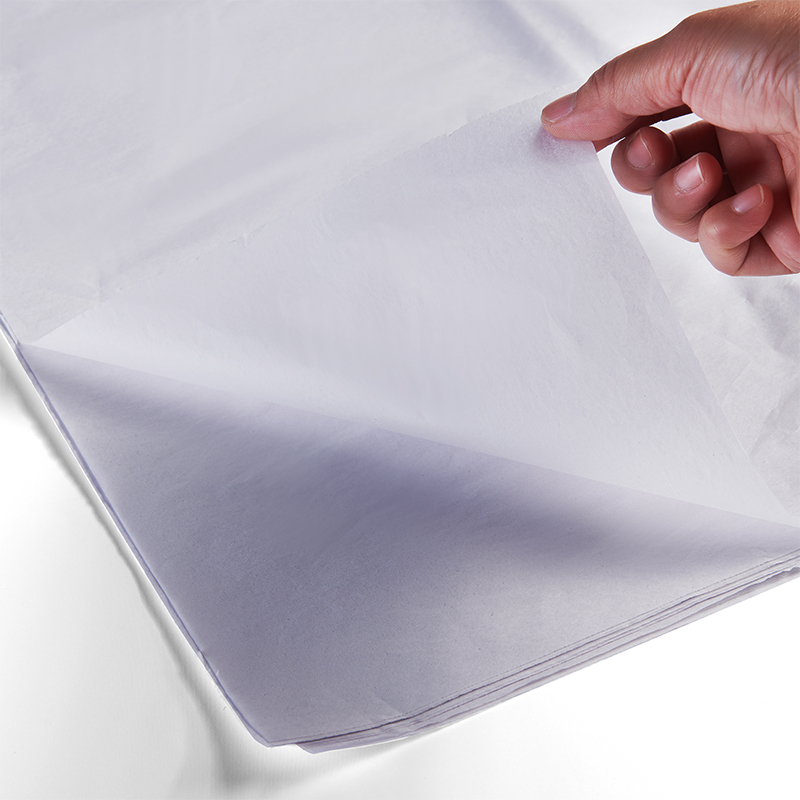
The paper features a dual-texture design with distinct functional properties on each side. One side has a smooth glossy finish, while the reverse has a matte texture. This design allows for both polished presentation and secure packaging, making it suitable for a range of commercial applications. With a minimum order quantity of 10,000 pieces, this product is available in standard formats and can be customized to meet specific packaging requirements.
Parameter | Details |
Basis Weight | 14/17 GSM |
Main Components | 100% post-consumer recycled fibers |
Manufacturing Process | Fiber processing with no harsh additives |
Standard Color | White |
Standard Sizes | 320×500 mm / 370×500 mm |
Packaging | 500 sheets per ream |
Certifications | FSC, GRS, RoHS, REACH |
Primary Usage | Product stuffing and packaging |
Place of Origin | China |
This stuffing paper is produced entirely from post-consumer recycled fibers, diverting waste from landfills and supporting circular economy practices. The manufacturing process avoids harsh chemical additives, resulting in a product that is both biodegradable and fully recyclable. These properties help businesses reduce their environmental footprint and comply with international sustainability regulations.
The dual-texture finish enhances both the aesthetic and practical aspects of packaging. The glossy side provides a clean, professional appearance suitable for retail and luxury applications. The matte side increases friction, preventing items from slipping during transit and improving packaging efficiency for industrial operations.
Despite its low basis weight, the paper maintains sufficient tear resistance for typical packaging tasks. It can be easily folded, crumpled, or shaped to fit various product contours without tearing. This combination of light weight and durability helps reduce shipping costs while providing adequate protection against dust, minor scratches, and deformation.
In apparel packaging, the paper wraps folded garments to protect against dust, creases, and minor abrasions. For footwear, it maintains the shape of shoes, boots, and sandals during storage and shipping, while keeping interiors free of debris. These applications help preserve product condition from manufacturing to final delivery.
Luxury brands use this paper as internal stuffing for handbags, wallets, and small leather goods to prevent sagging and structural damage. It also serves as lining for retail boxes and gift bags, adding a layer of protection while maintaining a sophisticated presentation that aligns with luxury brand aesthetics.
For general commercial use, the paper lines shipping cartons to cushion fragile items and fills empty spaces to prevent product movement during transit. Its neutral color complements various brand identities, making it a versatile choice for businesses across different industries.
We offer comprehensive customization services to meet diverse commercial packaging needs. Available customizations include:
Adjustments to paper weight (GSM) based on protection requirements
Custom sizes to fit specific products or packaging formats
Alternative color options beyond standard white
Logo printing and full-color CMYK printing for branding purposes
Choice between flat sheets or roll formats
Additional value-added services such as paper bag production
All customizations are designed to maintain the core properties of sustainability and product protection while aligning with brand identity.
Yes. The paper is made from 100% post-consumer recycled fibers, is fully recyclable, and is biodegradable. It meets FSC, GRS, RoHS, and REACH standards, supporting circular packaging initiatives.
The paper is suitable for apparel, footwear, handbags, small accessories, and general box lining. It works well for any item requiring gentle protection, shape retention, or a clean presentation.
Yes. We provide custom sizes as part of our standard customization services, ensuring the paper fits your specific products and packaging containers without the need for trimming.
The standard product features a dual-texture design with a smooth glossy finish on one side and a matte texture on the other. Custom finishes may be available upon request for large-volume orders.
Yes. Its clean appearance and eco-friendly credentials align with the values of modern luxury consumers. It provides adequate protection for delicate items while enhancing the unboxing experience.
Discover glassine paper: grease-resistant, curbside recyclable packaging for food, apparel, and archives—plastic-free.
Glassine vs. MG paper: Avoid packaging failures and budget bloat. Compare grease resistance, strength, and costs to choose the right material.
Discover how glassine paper provides plastic-free grease resistance and tamper-evident security for sustainable packaging.
17 GSM vs 40 GSM tissue paper: Which weight suits your brand? Learn how opacity, print quality, and protection impact unboxing and costs.
Switch to glassine paper bags for apparel without slowing packing. Our guide covers GSM, sizing, closures, and print specs to protect garments and meet sustainability goals.
Stop costly footwear mold outbreaks in transit. Learn why standard paper fails and when to upgrade to anti-mold tissue paper to protect profits.
Colored vs custom printed tissue paper: balance cost, brand impact, and ROI. Choose the right retail packaging strategy to boost unboxing sales and retention.
Struggling with sustainable packaging risks? Use this B2B checklist to evaluate honeycomb paper yield, GSM, and TCO before bulk orders.
A technical guide to sourcing custom printed tissue paper. Learn to evaluate GSM, acid-free materials, eco-certifications, and vendor pricing.
Discover how to design, select eco-friendly materials, and order custom printed tissue paper to elevate your brand's unboxing experience.
Learn to design custom printed tissue paper. Master technical rules for vector files, CMYK, and materials to elevate your brand's unboxing.
Elevate your unboxing experience with cost-effective custom printed tissue paper. Learn design tips, food-safe paper rules, and vendor selection.
Discover how custom printed tissue paper elevates your unboxing experience, boosts brand retention, and meets modern sustainability standards.
Modern businesses face a constant packaging dilemma. You must balance soaring consumer demand for eco-friendly materials against strict functional requirements like grease resistance and archival safety. Standard paper often fails by rapidly absorbing oils and moisture. Plastic poly bags alienate ec
Stricter single-use plastic regulations force product brands to rethink packaging strategies completely. Governments globally now penalize excess plastic waste. Consumers also demand genuinely eco-friendly alternatives. Polybags served as the default standard for decades. Now, transitioning away fro
Balancing protective packaging costs against the demand for premium customer unboxing experiences presents a daily dilemma. Many ecommerce brands struggle to find this equilibrium. Moving from regular, off-the-shelf wrapping materials to printed alternatives changes your operational landscape. We view this transition as a strategic branding decision rather than just an aesthetic upgrade. It impacts everything from warehouse packing speeds to customer retention rates.
The final touchpoint in e-commerce or luxury retail is never the checkout page. It is the physical unboxing experience. Brands spend heavily acquiring customers online. Yet, many fail entirely at the delivery stage. Poor packaging instantly compromises your premium pricing strategy. Buyers feel disc
In today's competitive market, packaging has evolved far beyond a simple protective shell. It is now a critical part of the customer journey, with the "unboxing experience" serving as a powerful driver of satisfaction and retention. Among the tools available to brands, tissue wrapping paper stands out as a versatile and high-impact element. It acts as both a functional cushion and a canvas for brand expression. This guide explores the strategic shift from basic gift-wrapping to a professional standard for retail and e-commerce, where every layer tells a story. You will learn how to select the right materials, master professional techniques, and leverage tissue paper to elevate your brand's presentation, ensuring your products make a memorable first impression.
In today's market, the unboxing experience is more than just a transaction; it's a powerful statement about a brand's values. Consumers increasingly demand sustainable packaging, creating a significant dilemma for businesses. They want beautiful, eco-friendly presentation, yet the technical realities of paper recycling are complex and often misunderstood. This gap in understanding contributes to a staggering amount of waste, with an estimated 40 million pounds of gift wrap discarded annually in the U.S. alone. Much of this ends up in landfills, even when consumers try to recycle it.
Transforming a simple bunch of flowers into a professional, high-value bouquet is an art form, and the secret lies in the wrap. Tissue paper is the industry standard for a reason; it adds volume, introduces texture, and creates a premium feel that delights the recipient. Moving beyond basic wrapping techniques allows florists to "sculpt" with paper, enhancing the visual appeal and increasing the perceived value of any floral arrangement. Mastering this skill is about more than just aesthetics. It’s about creating a durable, moisture-resistant, and striking package that protects the blooms during transport and elevates the entire gifting experience. This guide will walk you through the professional methods, from selecting the right materials to executing advanced folding techniques, ensuring every bouquet you create looks exceptional and survives the journey from your shop to its new home.