Views: 0 Author: Site Editor Publish Time: 2026-10-23 Origin: Site
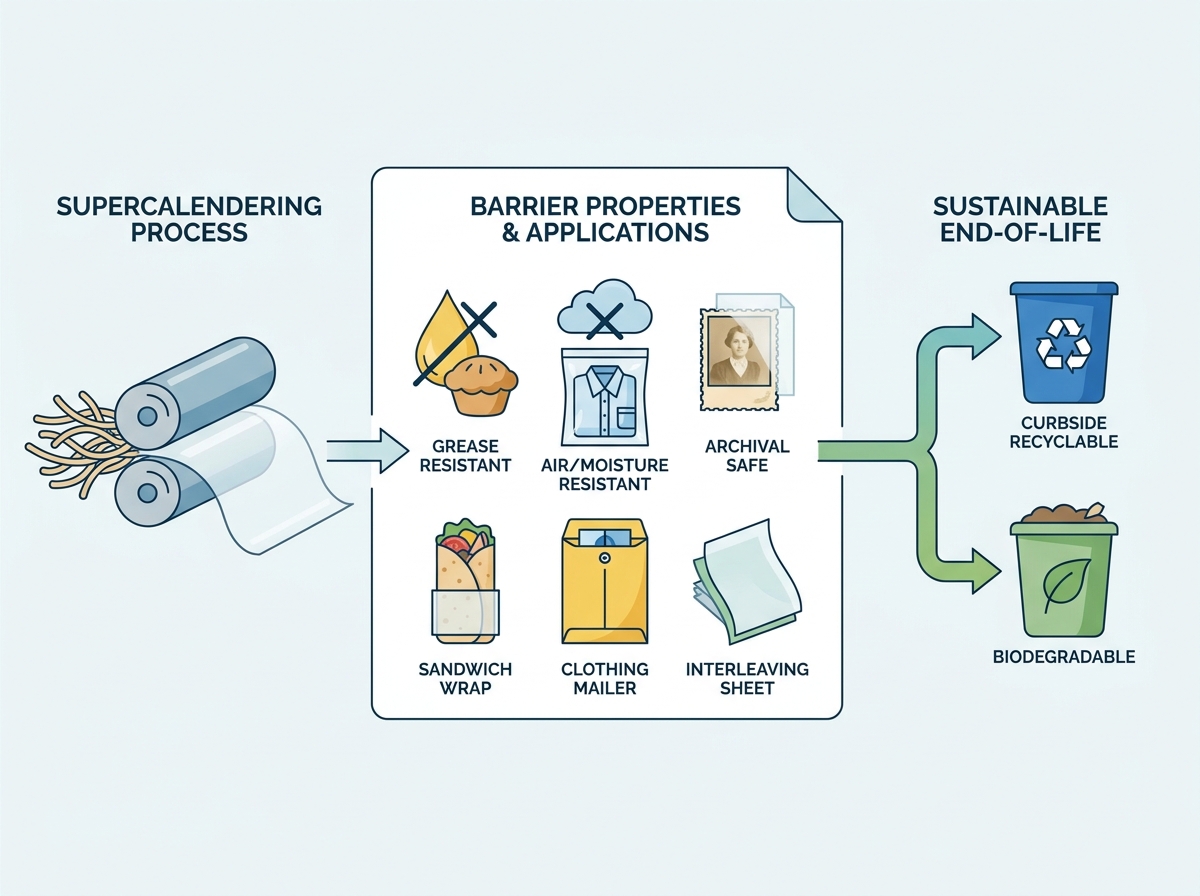
Buyers actively evaluating packaging, archival, or food-service materials often struggle to find a viable alternative to conventional plastics. You need a reliable material offering strong protection without adding to the global plastic waste crisis. Enter glassine paper. This smooth, translucent paper is manufactured through a specialized mechanical process called supercalendering. This intense pressing technique aligns the wood fibers so tightly together it becomes inherently resistant to grease, air, and moisture. Best of all, it achieves these impressive barrier properties without relying on synthetic chemical coatings.
This article provides a straightforward evaluation of its core applications. We will compare its performance directly against common industry alternatives. You will also learn the practical, operational realities of implementing this sustainable material directly into your business supply chain. Ultimately, you can confidently decide if it meets your brand’s specific protective packaging requirements.
Glassine paper is primarily used as a grease-, air-, and water-resistant barrier for food service, e-commerce apparel, and archival protection.
It achieves its barrier properties mechanically (supercalendering), meaning it remains 100% curbside recyclable and biodegradable, unlike wax-coated or poly alternatives.
While highly effective for friction and grease protection, glassine is not entirely waterproof and lacks the structural puncture-resistance of heavy plastics.
Evaluating glassine requires matching GSM (grams per square meter) to the specific use case and verifying FSC certification for compliance-driven sustainability goals.
Regulatory pressures surrounding packaging waste continue to mount globally. Extended Producer Responsibility (EPR) laws now force brands to rethink their protective packaging strategies. Consumers also express widespread backlash against single-use plastics. They actively demand eco-friendly unboxing experiences. You can no longer rely on standard poly bags without risking significant brand reputation damage.
This industry shift presents a logistical challenge. How do you replace a highly reliable plastic without compromising product safety? Glassine bridges this exact gap between premium aesthetics and strict environmental compliance. It offers a smooth, frosted appearance. This unique texture elevates the perceived value of your products during the unboxing process. Customers immediately recognize it as a deliberate, sustainable choice.
A successful transition to this material requires careful operational planning. You must maintain product integrity during shipping, handling, and warehouse storage. The packaging must thoroughly protect goods from dirt, dust, and minor friction. However, it must not increase disposal friction for the end-user. If consumers must peel plastic films away from paper backings, they often throw the entire package in the trash out of frustration. Glassine eliminates this issue completely. It is universally recyclable in standard curbside paper bins, simplifying the end-of-life process for your customers.
Different industries leverage this specialized material to solve unique packaging challenges. You must understand how its mechanical properties align with specific commercial use cases.
E-commerce and Apparel: The fashion industry frequently replaces clear poly bags with semi-transparent glassine paper bags. It protects delicate garments from dust, moisture, and fabric friction during long transit routes. Unlike traditional plastic, it completely eliminates static cling. This ensures a smooth, premium aesthetic when customers slide garments out of the packaging.
Culinary and Food Service: Food producers rely heavily on it as a safe, FDA-compliant barrier. It wraps freshly baked goods, artisan confections, and cured meats. It effectively keeps heavy grease from bleeding through to outer cardboard packaging. Crucially, it achieves this grease resistance mechanically. It does not rely on harmful per- and polyfluoroalkyl substances (PFAS), which face increasing regulatory bans globally.
Archival, Photography, and Fine Arts: Museums, galleries, and private collectors use it primarily as protective interleaving paper. Art handlers separate valuable prints, vintage photographs, and delicate historical documents. Specialized pH-neutral (acid-free) variants protect delicate surfaces from long-term chemical transfer. They prevent moisture damage and stop smudging without scratching sensitive inks.
Pharmaceuticals and Cosmetics: Medical and beauty brands utilize it for small sample envelopes and hygienic tray liners. Its incredibly smooth, non-shedding surface ensures no stray paper fibers contaminate sterile or sensitive products. It provides a clean, professional barrier for single-use bandages, medicinal patches, or cosmetic powder samples.
Procurement teams must carefully weigh the advantages and functional trade-offs of different packaging materials. You cannot simply swap one material for another without understanding fundamental performance differences.
Poly bags heavily dominate e-commerce shipping. However, their environmental impact remains severe. Polyethylene takes centuries to decompose in landfills.
Advantage: Glassine is naturally biodegradable. It breaks down easily in natural environments within a matter of weeks. It also eliminates the annoying static cling commonly associated with soft plastic bags, making fulfillment packing faster.
Trade-off: It is opaque or frosted, rather than crystal clear. This reduced visibility might impact warehouse barcode scanning. Optical scanners sometimes struggle to read fine print through frosted paper. You may need to apply barcode stickers directly to the outside of the bag.
The food service industry heavily utilizes wax paper for cheap grease resistance.
Advantage: Glassine is fully curbside recyclable. Wax paper relies on thick paraffin or soybean-based wax coatings. These sticky coatings severely contaminate standard paper recycling streams. Municipal recycling facilities often reject wax-coated papers entirely, sending them straight to landfills.
Trade-off: Wax paper provides a slightly higher barrier against heavy, pooling liquids. However, for standard grease resistance found in pastries or sandwiches, glassine performs exceptionally well without carrying the recycling drawbacks.
Bakeries and home chefs frequently confuse these two similar-looking materials.
Advantage: Glassine is much thinner, highly pliable, and more cost-effective for general wrapping and outer packaging. You can easily fold, crease, and tape it around complex product shapes.
Trade-off: It is fundamentally not heat-resistant. Parchment paper undergoes a specialized silicone coating process. This allows parchment to withstand extreme oven temperatures for baking. If you put glassine in a hot oven, it will smoke and burn quickly.
Material Performance and Sustainability Comparison
Material Type | Grease Resistance | Curbside Recyclability | Heat Resistance | Primary Industry Use Case |
|---|---|---|---|---|
Glassine | High | 100% Curbside Acceptable | Low | Apparel, Retail, Fast Food |
Poly Bags | High | Specialty Drop-off Only | Low | Heavy-duty E-commerce |
Wax Paper | High | Non-recyclable (Landfill) | Medium | Deli meats, sticky foods |
Parchment | Medium | Varies (Often Compostable) | High | Oven baking, roasting |
Transitioning your supply chain requires acknowledging mechanical material limitations. You must prepare your warehouse teams for distinct operational realities to avoid unnecessary product damage.
You must clearly understand the difference between water-resistant and waterproof. The supercalendering process makes the surface incredibly dense. Light water droplets will initially bead up and roll off. However, it will eventually degrade if submerged entirely. Prolonged exposure to heavy rain during last-mile delivery will compromise the paper fibers. You should pair it with weather-resistant outer mailers for maximum transit protection.
Address the risk of tearing before you place bulk packaging orders. Paper lacks the inherent physical stretch of soft plastics. If an apparel brand uses bags that are too small, they create an overly tight fit. The side seams become highly prone to splitting during transit vibrations. Always size up slightly to allow garments adequate room to shift.
Warehousing conditions matter immensely. The material can warp, curl, or lose its smooth finish if stored incorrectly. Extreme humidity fluctuations prior to use will alter the paper's internal moisture content. You should store unformed bags or raw rolls in climate-controlled environments. Keep them sealed tightly in their original protective packaging until right before the packing process begins.
Premium sustainable materials rarely compete on purely upfront unit costs against cheap plastics. Basic lightweight poly bags cost mere pennies. Premium glassine can carry a slightly higher initial price tag. You must build your internal business case on long-term brand equity, improved customer loyalty, and strict regulatory compliance.
Common Implementation Mistakes to Avoid:
Ordering exact-fit bag sizes for bulky garments, leading to blowout tears during shipping.
Storing raw inventory near open warehouse loading docks where temperature and humidity fluctuate rapidly.
Failing to test warehouse barcode scanner readability through the translucent paper before a full-scale rollout.
Sourcing the right material dictates the ultimate success of your packaging initiative. You must specify exact technical requirements to your manufacturing suppliers to prevent costly errors.
Thickness dictates durability and flexibility. You must guide your procurement buyers to match the Grams per Square Meter (GSM) to the specific application.
30–40 GSM: Ideal for lightweight food wrappers, interleaving fine art prints, or wrapping delicate custom jewelry.
40–50 GSM: Perfect for small cosmetics, pharmaceutical sample envelopes, or inner packaging protection layers.
60+ GSM: Absolutely necessary for durable e-commerce shipping bags. This thickness handles the heavy friction of denim jeans or woolen sweaters during rough parcel transit.
Art handlers and archival buyers must explicitly request acid-free variants. Standard commercial wood pulp contains a natural compound called lignin. Lignin turns yellow and highly acidic over time. This acidity will aggressively transfer to delicate prints or historical documents, causing irreversible damage. Always ask suppliers for official pH-neutral certification if your products require long-term archival storage.
Brands love adding custom logos to their sustainable packaging. You can print on this material, but it requires specific industry expertise. Its low-porosity, extremely smooth surface prevents standard commercial inks from absorbing quickly. Printers must use specialized flexographic or offset printing techniques. When sourcing high transparency glassine paper, explicitly confirm ink adherence with your supplier. Ask for eco-friendly, water-based, or soy-based ink options to maintain the packaging's overall recyclability profile.
Sustainability claims mean nothing without verified proof. You must look for Forest Stewardship Council (FSC) certification. This certification ensures the raw wood pulp is sustainably harvested from responsibly managed global forests. It strongly protects your brand from public accusations of greenwashing. It also guarantees fair labor practices at the foundational forestry level.
Procurement Best Practices:
Always request physical samples across three different GSM weights before committing to a bulk order.
Demand documented proof of active FSC certification directly from the paper manufacturer.
Run a manual small-batch rub-test on printed logos to ensure the ink does not smear under transit friction.
The primary purpose of this material is to provide a highly sustainable, premium barrier against grease, air, and friction. It elegantly bridges the operational gap between environmental responsibility and high-end brand presentation. By relying on heavy mechanical processing rather than toxic chemical coatings, it offers a zero-friction, fully recyclable disposal experience for your customers.
To move forward successfully with implementation, you should take immediate, practical steps.
Audit your current waste: Identify which plastic poly bags or wax-coated papers you currently use most frequently across your product lines.
Request GSM samples: Contact certified suppliers and ask for a wide range of thicknesses to feel the structural differences firsthand.
Run live transit tests: Pack your core products in the new paper bags and ship them across the country. Inspect them carefully upon return for seam splitting, barcode readability, and unexpected moisture damage.
Making this transition requires careful sizing and strict climate management in your warehouses. However, the resulting boost to your long-term brand equity and environmental compliance makes the operational effort highly rewarding.
A: No, it is highly water-resistant due to its dense surface, but it is not waterproof. It will cause light water droplets to bead up. However, if submerged or exposed to heavy rain for prolonged periods, the paper will eventually absorb the water and break down.
A: Yes. Unlike wax-coated or plastic-lined papers, pure glassine contains no synthetic chemicals or poly-films. It is 100% recyclable in standard curbside paper recycling streams. It is also naturally biodegradable.
A: Standard glassine cannot be heat-sealed without applying a specialized secondary coating. Because it lacks thermoplastic properties, applying heat will only burn the paper. Most businesses use eco-friendly stickers, adhesive tape, or mechanical crimping to close the bags securely.
A: No. Standard glassine is non-toxic. It consists simply of mechanically smoothed wood pulp. It is generally FDA-approved for direct food contact, making it perfectly safe for wrapping baked goods, meats, and confections without transferring harmful chemicals like PFAS.