Views: 0 Author: Site Editor Publish Time: 2026-09-24 Origin: Site
The unboxing experience directly drives customer retention today. Shoppers share beautiful packaging online constantly. Yet, retail margins are tighter than ever. You must balance presentation and profitability carefully. Scaling your retail operation eventually forces a tough choice. You must decide whether to stick to standard colored sheets or upgrade. Investing in printed packaging represents a major operational shift.
Picking the right packaging requires looking beyond simple aesthetics. You need to evaluate unit costs and supply chain lead times. Quantifiable brand impact matters just as much. We have built an evidence-based framework for you. It helps you choose the option perfectly aligned to your operational maturity. Your brand strategy dictates the right path. Let us explore how to maximize your packaging investments.
Cost vs. Value: Colored tissue minimizes upfront costs, while custom printed tissue paper acts as a low-cost marketing channel that drives brand recall.
Volume Dictates Strategy: Minimum Order Quantities (MOQs) and storage capacity are the primary operational bottlenecks for custom options.
Sustainability Matters: Both options can be eco-friendly, but custom printing requires vetting for FSC-certified paper and soy/water-based inks.
Hybrid Approaches Work: Many retailers successfully blend standard colors with smaller runs of custom logo tissue paper for seasonal campaigns.
Begin by defining your core packaging objectives. Tissue paper serves multiple functions inside a shipping box. It provides functional protection against scratches and dust. It elevates premium presentation for high-end goods. It also boosts social media shareability. You must decide which function drives your business forward. Clear objectives prevent wasted packaging budgets.
Industry data shows how packaging affects perceived product value. A premium unboxing metric often translates into secondary marketing. Consumers frequently film their unboxing experiences at home. They post these videos online as user-generated content. This free advertising reaches thousands of potential buyers daily. A memorable unboxing moment sparks joy. It triggers dopamine releases linked to your brand.
We need to shift our financial lens here. Many managers view packaging as a simple sunk cost. You should treat it as a customer acquisition cost. Beautifully wrapped items drive repeat purchases naturally. They increase customer loyalty over time. Think of retail packaging tissue as a silent ambassador. It works hard after the sale concludes. Viewing packaging as marketing changes your budget allocation.
Audit your current unboxing experience by filming it yourself.
Survey your existing customers about their packaging preferences.
Track social media mentions linked directly to your packaging.
Calculate your acceptable customer acquisition cost per unit.
Plain colored sheets offer massive operational advantages. Suppliers keep them in stock constantly. You get immediate availability without long warehouse waits. You face no minimum order quantities. Pricing remains predictable and incredibly low per unit. You can scale your orders up or down easily. This agility helps during unpredictable retail seasons.
Certain business models thrive on these specific benefits. Early-stage startups love the financial flexibility. High-volume, low-margin goods require tight cost controls. Brick-and-mortar stores often prioritize speed over branded touchpoints. If you need supplies tomorrow, standard colors win every time. Using colored tissue paper keeps daily operations running smoothly. It prevents shipping bottlenecks during peak holidays.
However, strict strategic limitations exist. You miss a massive opportunity for brand differentiation. Your boxes look identical to thousands of others online. The ecommerce landscape feels incredibly crowded today. Looking generic poses a serious business risk. Customers might forget your brand entirely. They only remember the physical product itself. You sacrifice long-term brand recall for short-term operational ease.
Picking colors clashing with your primary brand identity.
Using too many different colors across product lines.
Buying cheap variants lacking basic colorfast properties.
Failing to fold the sheets neatly during fulfillment.
Custom designs create powerful brand identity alignment. Repeating patterns and bold typography leave a lasting mark. A well-designed custom logo tissue paper transforms a standard box. It builds a proprietary brand experience instantly. Shoppers recognize your package before they even open it. This visual consistency builds deep customer trust.
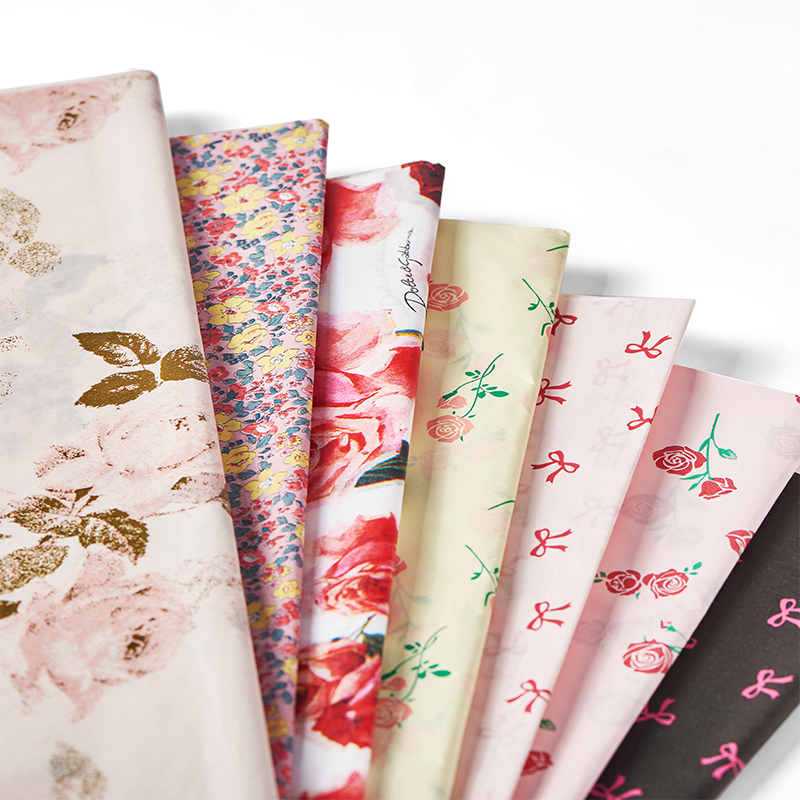
Technology has shifted significantly in recent years. We moved past simple step-and-repeat logos quickly. Modern digital printing allows for stunning visual upgrades. You can now utilize beautiful full-color tissue paper. This technical shift reflects seasonal campaigns perfectly. You can print complex artwork directly onto the sheets. It showcases your creativity and intense attention to detail.
Premium packaging amplifies perceived value drastically. Retailers use it to maintain premium price points safely. Customers accept higher prices when presentation feels luxurious. Friction during the buying process drops noticeably. They feel they receive their money's worth completely. The tactile sensation of branded paper elevates the entire product.
We also see a strong eco-halo effect emerging. You can print sustainability messaging directly on the sheets. Phrases like "Compostable" or "100% Recycled" work incredibly well. This transparency proactively builds consumer trust. It shows you care deeply about the planet. You communicate your core values clearly and visually. By utilizing custom printed tissue paper, you turn waste into communication.
Let us compare the upfront and scaled costs directly. Plain paper has a static, low cost. Printed paper uses a sliding volume scale. High volumes drastically reduce your per-unit cost over time. However, the initial setup fees require upfront capital. You must calculate your break-even point carefully. High turnover makes custom printing incredibly profitable.
Production and lead times contrast sharply. Plain stock sits on shelves waiting for you. Custom runs take two to four weeks on average. You must plan your inventory much further ahead. Supply chain disruptions affect custom orders more severely. Buffer stock becomes necessary during peak shipping seasons.
Storage and inventory management present unique logistical challenges. Holding bulk custom inventory demands physical warehouse space. Pallet storage costs eat into retail margins quickly. You must store thousands of sheets to get good pricing. Ordering plain stock on demand frees up cash and space. We advise analyzing your square footage costs first.
Sustainability requires a careful eco-comparison today. Plain recycled paper is incredibly easy to source everywhere. However, printed options now offer comparable eco-certifications. You just need to source them correctly. Look for acid-free materials and certified soy ink. Verified forestry certifications matter deeply to modern consumers.
Feature | Standard Colored Tissue | Custom Printed Tissue |
|---|---|---|
Upfront Cost | Very Low | Moderate to High (Setup Fees) |
Cost at Scale | Static | Decreases significantly with volume |
Lead Time | Immediate (1-3 days) | Extended (2-4 weeks) |
Brand Impact | Low (Generic appearance) | High (Proprietary experience) |
Inventory Needs | Order on demand | Requires bulk storage space |
Color matching often creates massive production headaches. On-screen hex codes look completely different from physical prints. Monitors emit light, while paper absorbs it. You must use physical Pantone (PMS) matching. We warn against unexpected color shifts strongly. Complex color printing can look muddy if handled poorly. Always request a physical press proof first.
Ink rub-off destroys product protection instantly. Cheap printing bleeds onto expensive garments. It ruins the customer experience immediately upon arrival. Emphasize the urgent need for acid-free paper. High-quality, properly set inks prevent this disaster entirely. Do not cut corners on ink quality. Testing paper against fabric is mandatory.
Navigating Minimum Order Quantities requires careful strategy. We offer a transparent look at standard industry MOQs. They typically start around 250 to 500 sheets for digital runs. Offset printing demands much higher volumes for efficiency. Avoid the financial trap of dangerous over-ordering. Buying 10,000 sheets to secure a lower unit price hurts cash flow. It ties up money you need elsewhere.
Artwork formatting delays production constantly. You must outline your prepress requirements early. You need vector files for crisp, clean lines. Bleed areas ensure colors reach the very edge perfectly. Die-lines guide the automated cutting process. Clean files prevent frustrating production delays. Partnering with a skilled graphic designer saves time.
Convert all colors to CMYK or specific Pantone spot colors.
Outline all fonts to prevent missing typeface errors.
Embed all linked images securely within the file.
Include a minimum of 0.125 inches of bleed on all sides.
Export the final artwork as a high-resolution PDF.
You need a clear path forward now. We categorized the decision into three common operational scenarios. Find the one matching your current business reality. This framework removes emotion from the purchasing decision.
Scenario A (Choose Colored): You are launching a new product line. Demand remains completely untested in the market. You have strict immediate budget constraints. Perhaps you need packaging in under seven days. Plain paper keeps you agile and safe. It preserves your capital for core product development. You can always upgrade later as sales grow.
Scenario B (Choose Custom Printed): You have predictable, steady order volumes weekly. You target high Customer Lifetime Value metrics aggressively. Your brand relies heavily on influencer marketing online. You operate in the luxury or premium retail sector. Printed sheets justify your premium pricing. They drive organic marketing through unboxing videos. The return on investment becomes glaringly obvious.
Scenario C (The Hybrid Pivot): You blend both approaches for maximum efficiency. Use plain sheets for everyday retail fulfillment needs. Order short-run custom sheets for special promotional events. They work beautifully for limited holiday releases. Use them for VIP tiers or exclusive PR boxes. This balances cost control with targeted brand elevation perfectly.
Neither packaging option is universally superior across all retail models. The right choice hinges entirely on your specific order volume. Margin tolerance and brand positioning play massive roles here. You must evaluate your specific operational needs honestly. Plain paper offers speed, simplicity, and low upfront risk. Printed paper delivers unforgettable brand moments and customer loyalty.
We highly recommend starting with a transparent supplier. Find a partner offering clear pricing structures upfront. Look for low initial minimum order quantities to test the waters. Always demand verified eco-credentials before signing purchasing contracts. Good suppliers happily provide this documentation. They want to build a long-term partnership with you.
Take action today by requesting physical product samples. Test the paper weight in your own hands. Check the print clarity closely under natural light. Verify the ink fastness by rubbing it against spare fabric. Do this before committing to a full production run. Smart testing prevents costly packaging mistakes.
A: Varies by manufacturer, but modern digital printing allows for micro-runs (250 sheets), while offset printing for better unit economics usually requires 1,000+ sheets.
A: Yes, provided it is printed on FSC-certified, acid-free paper using soy-based or water-based inks. Always verify supplier certifications.
A: Yes, CMYK digital printing handles complex, multi-colored designs, though exact color matching is less precise than Pantone spot color printing used for simple logos.
A: Standard tissue can bleed if exposed to moisture. Retailers must specify "colorfast" and "acid-free" colored or custom tissue to protect inventory.