
Views: 0 Author: Site Editor Publish Time: 2025-12-12 Origin: Site
When it comes to presenting flowers, the wrapping makes all the difference. Whether it's for a birthday, wedding, or a thoughtful gesture, wrapping flowers with tissue wrapping paper adds a personal touch. Not only does it enhance the bouquet’s look, but it also protects the blooms.
In this guide, you’ll learn the steps to wrap flowers perfectly with tissue wrapping paper. We’ll show you how to elevate any bouquet into a polished gift that will impress.
Tissue paper is one of the most versatile materials for wrapping flowers. It comes in a wide range of colors, patterns, and textures, making it easy to personalize your floral presentation. From bright, vibrant hues to soft pastels, custom tissue paper allows you to match the bouquet to the occasion, whether it’s a romantic gesture or a celebratory gift. Additionally, tissue paper is affordable and easily available at most craft stores.
Tissue paper’s soft texture complements the natural beauty of flowers, creating an elegant and professional look. It can be used to form clean, crisp folds or delicate, frilled edges that give your bouquet a refined finish. When paired with a matching ribbon or twine, tissue paper elevates the bouquet into a thoughtful, visually appealing gift.
Many tissue paper options are made from recycled materials, aligning with the growing trend of sustainable and eco-friendly gift wrapping. By opting for custom tissue paper made from sustainable sources, you’re not only enhancing your bouquet’s appearance but also contributing to environmental conservation.
When selecting tissue paper for wrapping flowers, it’s important to choose the right thickness to avoid tearing. High-quality tissue paper ensures that your bouquet stays intact during the wrapping process. Custom tissue paper, with its unique designs and durability, can add an extra layer of sophistication to your floral arrangement. Ensure the color complements your flowers, or go for a contrasting hue to make the blooms pop.
Besides tissue paper, you’ll need a few other essentials:
Scissors: To cut the paper and ribbons.
Tape: Use double-sided tape for a seamless, professional finish.
Ribbons or Twine: To tie the bouquet together and add a decorative touch.
Optional: Clear Cellophane: Adds extra protection and a shiny, polished look.
Select ribbons that complement the tissue paper to create a cohesive and harmonious look for your bouquet. The right ribbon color can either match or contrast with the tissue paper, adding depth and interest to the presentation. For a more rustic or natural feel, eco-friendly twine is an excellent alternative, offering a charming, organic touch. A beautifully tied ribbon or twine not only secures the wrap, ensuring everything stays in place, but also enhances the bouquet’s overall aesthetic, giving it a polished, thoughtful appearance that makes the gift even more special and visually appealing to the recipient.
| Step | Action | Details |
|---|---|---|
| Step 1: Prepare the Flowers | Trim the stems and remove excess leaves | Ensure the flowers are clean and fresh. Trim any leaves or thorns that will be covered by the tissue paper. |
| Arrange flowers symmetrically | Ensure the blooms are evenly distributed and balanced for a harmonious appearance. | |
| Step 2: Select and Prepare Tissue Paper | Choose the right colors and patterns | Select tissue paper that complements your flowers and the occasion (e.g., pastel for romance, bright for celebrations). |
| Layer tissue paper for added depth | Overlap multiple sheets slightly to create a bigger wrapping area. For vibrant effects, layer contrasting colors. | |
| Fold tissue paper neatly | Avoid wrinkles by ensuring folds are crisp and even for a clean, professional look. | |
| Step 3: Position the Flowers | Place the bouquet in the center of the tissue paper | Position flowers with blooms facing outward for symmetry. Adjust the stems for balance. |
| Leave enough space at the top for decorative effect | Ensure the top of the tissue paper creates a natural, frilled effect once wrapped. | |
| Step 4: Wrapping the Tissue Paper | Start wrapping from the bottom, working upwards | Gather the edges of the tissue paper around the stems, ensuring a snug wrap that isn’t too tight to damage the blooms. |
| Overlap the tissue paper to cover the bouquet evenly | Adjust the edges as needed to ensure that the bouquet is covered symmetrically, maintaining a uniform look. | |
| Step 5: Securing the Wrap | Secure the wrap with tape or ribbon | Use clear tape to keep the tissue paper in place or wrap a ribbon or twine for a decorative touch. |
| Add a decorative bow or twine around the stems | Tie a neat bow or knot at the base for a polished finish, ensuring the wrap is secure without damaging the flowers. |
Take your bouquet wrap to the next level by adding a personal touch. Consider including a handwritten note or small decorative items, such as dried flowers, charms, or ribbons that reflect the recipient’s personality. If you're wrapping for a specific holiday or event, customize the tissue paper color and pattern to match the theme.
Mixing and matching tissue paper colors and patterns is a great way to create an eye-catching bouquet that stands out. For a bold, playful look, consider combining bright, contrasting colors with intricate patterns. Layering different textures, like crinkled tissue paper with smooth, glossy sheets, adds dimension and visual interest, making the bouquet feel more dynamic. For a sophisticated, refined look, choose metallic finishes or subtle patterns that elevate the overall aesthetic, giving the bouquet a polished, high-end finish.
For an extra touch of flair, consider adding embellishments such as glitter, small charms, or decorative tags. These elements add a unique, personalized feel to the bouquet, making it stand out even more. Whether it’s a sparkly touch for a festive occasion or a small charm for a sentimental gesture, these small additions can elevate the gift. They’re particularly effective for significant celebrations like birthdays, anniversaries, or weddings, where the wrapping becomes just as meaningful as the flowers themselves.
It’s important to leave enough of the flower stems exposed to make handling easier and to avoid moisture buildup. Over-wrapping can create a bulky appearance and reduce the overall balance of the bouquet. Keeping the stems exposed also allows them to continue absorbing water more efficiently.
While tape is necessary to secure the tissue paper, using too much can detract from the bouquet’s presentation. A small amount of tape or a neatly tied ribbon is usually sufficient to hold everything in place. The goal is to keep the bouquet looking clean and professional.
The quality of the tissue paper can significantly impact the final look of the bouquet. Thin or easily torn paper can ruin the overall appearance, so opt for thicker tissue paper that holds up during the wrapping process. Custom tissue paper provides an added touch of luxury while ensuring durability.
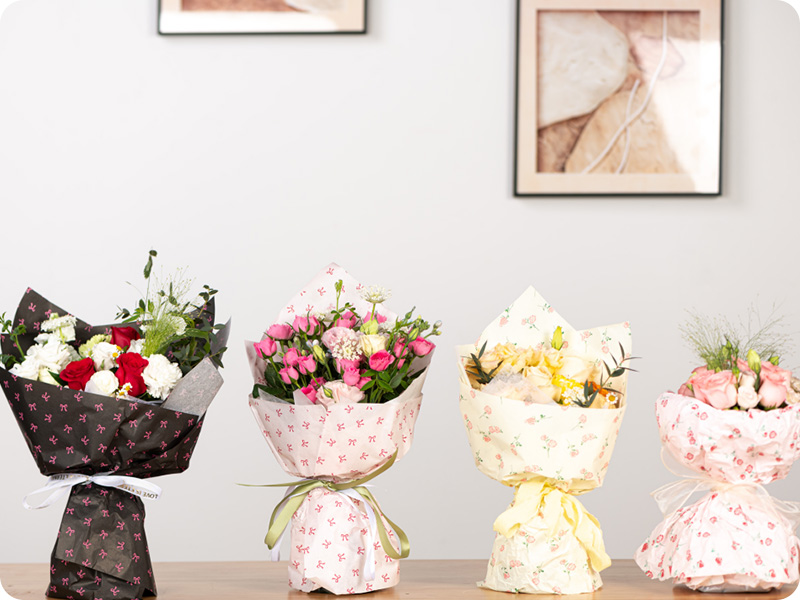
Double-sided tape is an excellent tool for securing tissue paper without leaving visible adhesive marks. This method creates a seamless, professional look, keeping the focus on the flowers rather than the wrap. It helps avoid the clutter of visible tape, ensuring that the final presentation appears clean and polished. Double-sided tape is particularly useful for maintaining the integrity of delicate tissue paper and ensuring a smooth, flawless finish, ideal for gifting.
To give your bouquet a unique and customized look, experiment with combining various tissue paper colors, patterns, and textures. Layering bold, vibrant colors can make the bouquet pop, while more subdued patterns can create an elegant effect. Seasonal designs, such as pastels for spring or rich reds for holidays, add an extra level of personalization. This approach lets you craft a bouquet that reflects the occasion and enhances the overall presentation, making it truly special.
For larger bouquets, multiple layers of tissue paper provide not only better structure but also a visually appealing depth. The added layers help support bigger stems, preventing the wrap from sagging and giving it a more balanced appearance. This technique can make the bouquet look fuller and more robust, enhancing the flowers’ visual impact. It’s especially useful for creating an elegant presentation with a larger arrangement, ensuring it holds up well while showcasing the flowers beautifully.
Wrapping flowers with tissue paper is an excellent way to elevate their presentation. Whether you're wrapping a single stem or an elaborate bouquet, tissue paper not only enhances the visual appeal but also provides protection. Tarlson Paper Global Co., Ltd. offers premium custom tissue paper that complements your flowers and ensures a refined, eco-friendly presentation. By selecting the right materials and following simple steps, you can create a beautiful arrangement that stands out for any occasion.
A: The best type of tissue paper for wrapping flowers is thick, high-quality paper that won’t tear easily. Custom tissue paper allows for personalization with colors and patterns that match the occasion, adding a special touch to your bouquet.
A: To wrap flowers with tissue paper and keep them fresh, trim the stems, and use a damp paper towel around the stems before wrapping them with tissue paper. You can also use custom tissue paper for a more stylish and personalized look while protecting the flowers.
A: Tissue paper is lightweight, easy to work with, and comes in various colors and patterns. It complements the delicate nature of flowers, and custom tissue paper can provide a unique, personalized touch for special occasions.
A: Yes, tissue paper is ideal for large bouquets. Layering multiple sheets of tissue paper provides better support and adds depth, giving the bouquet a fuller, more elegant appearance. Custom tissue paper can enhance the overall look with coordinated designs.
A: The cost of custom tissue paper varies depending on the design, quality, and quantity. Generally, custom tissue paper is affordable and provides a great way to elevate the presentation of your floral arrangements without breaking the bank.
A: You can experiment with different tissue paper colors, textures, and patterns to make your flower wrap stand out. Adding ribbons, tags, or small charms can also personalize your bouquet. Custom tissue paper allows for even more creativity with unique designs.


